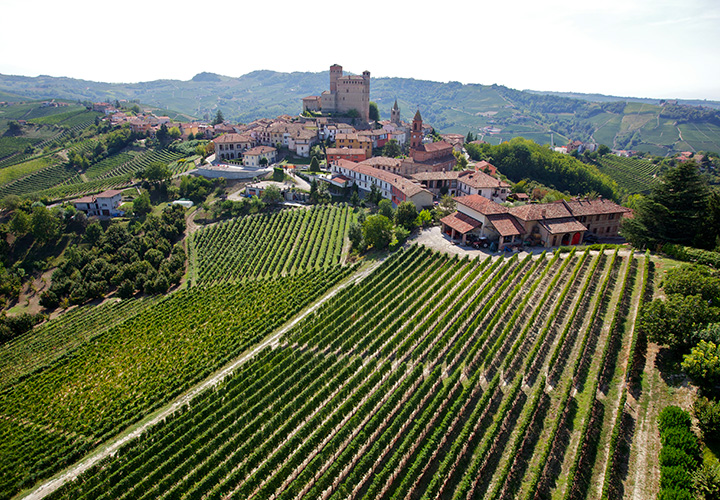
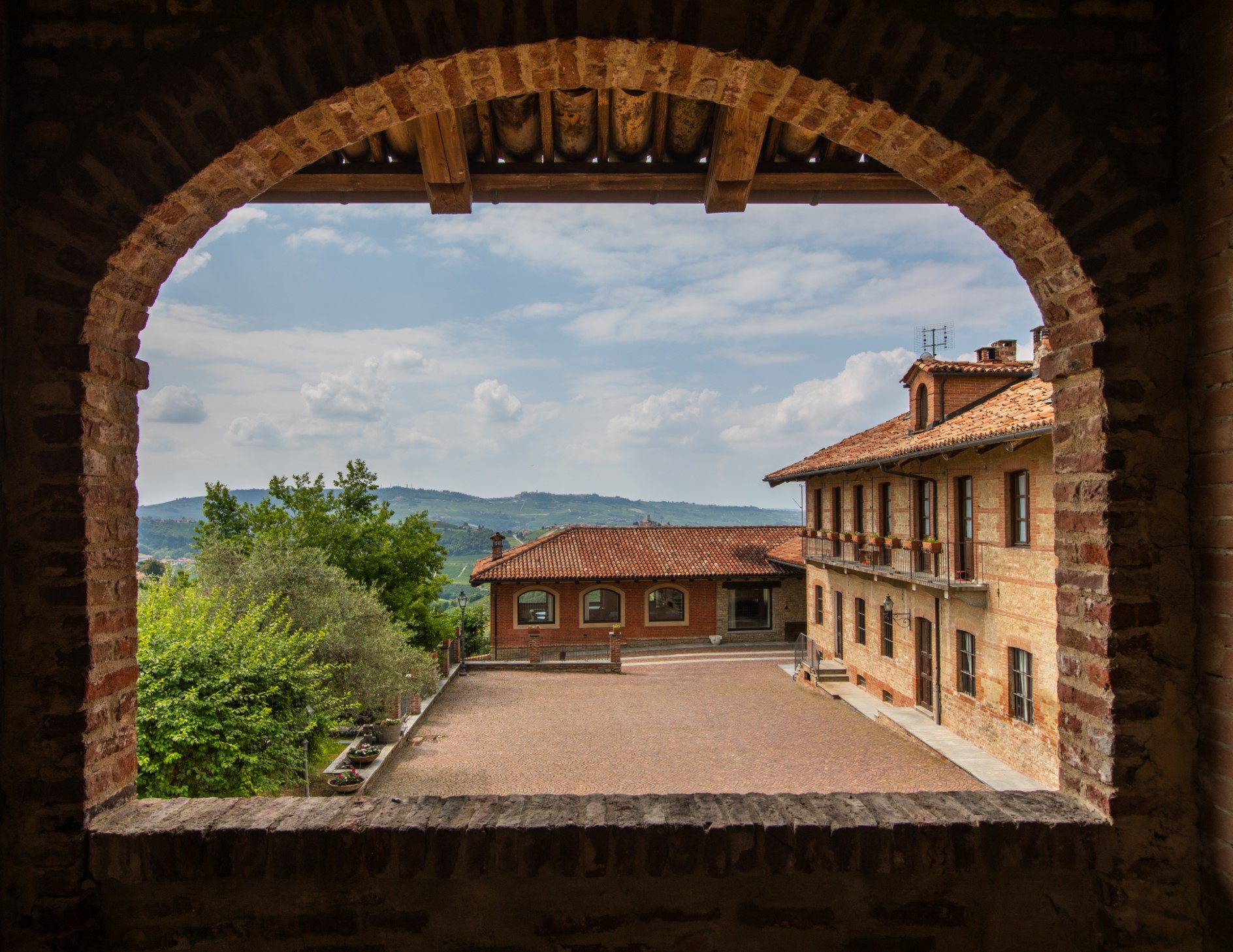
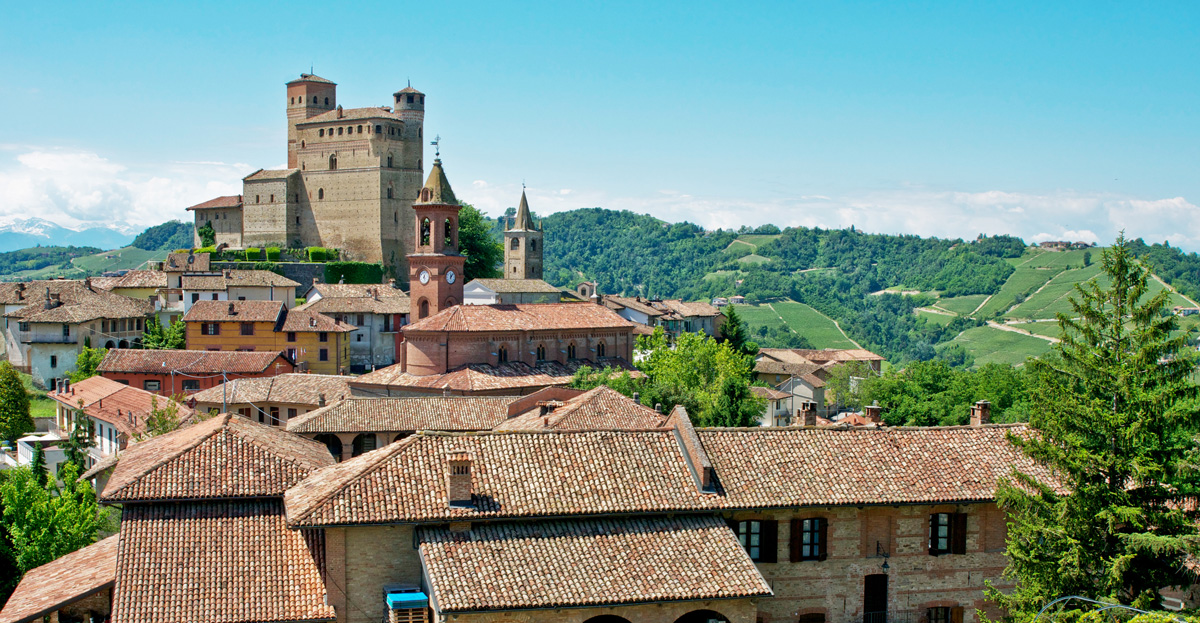
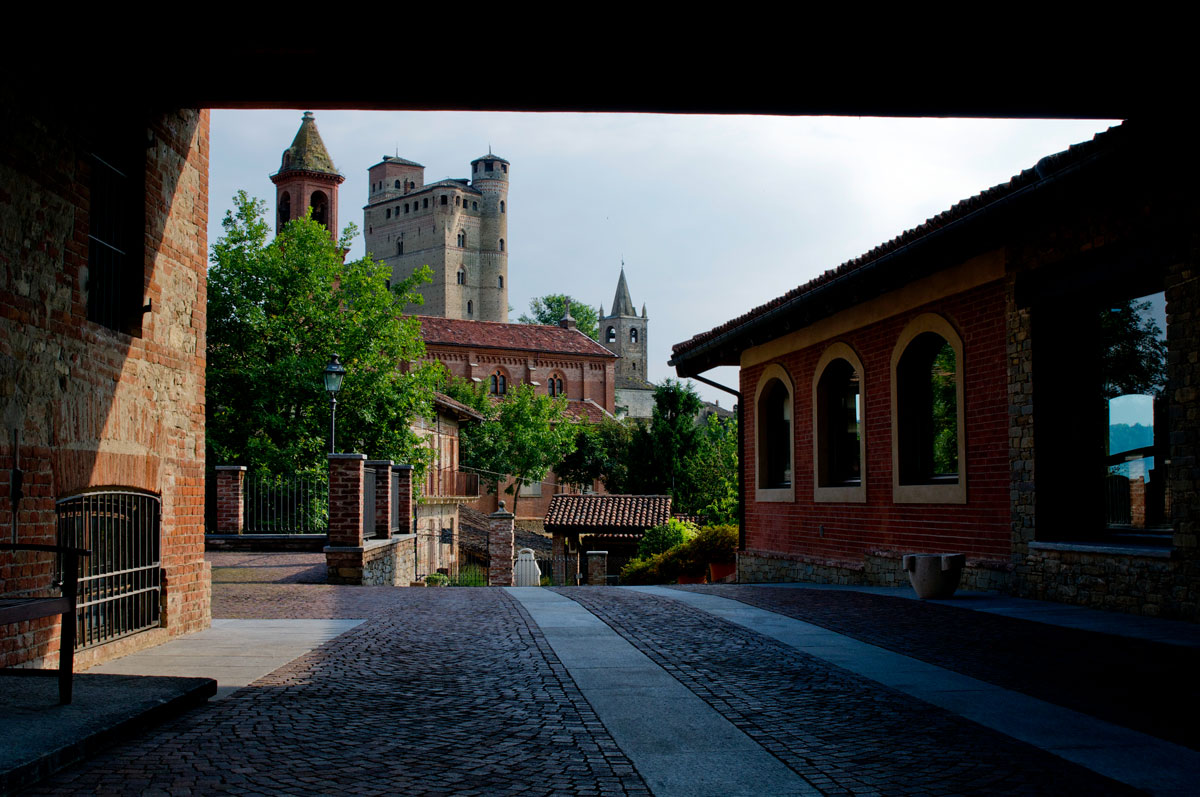
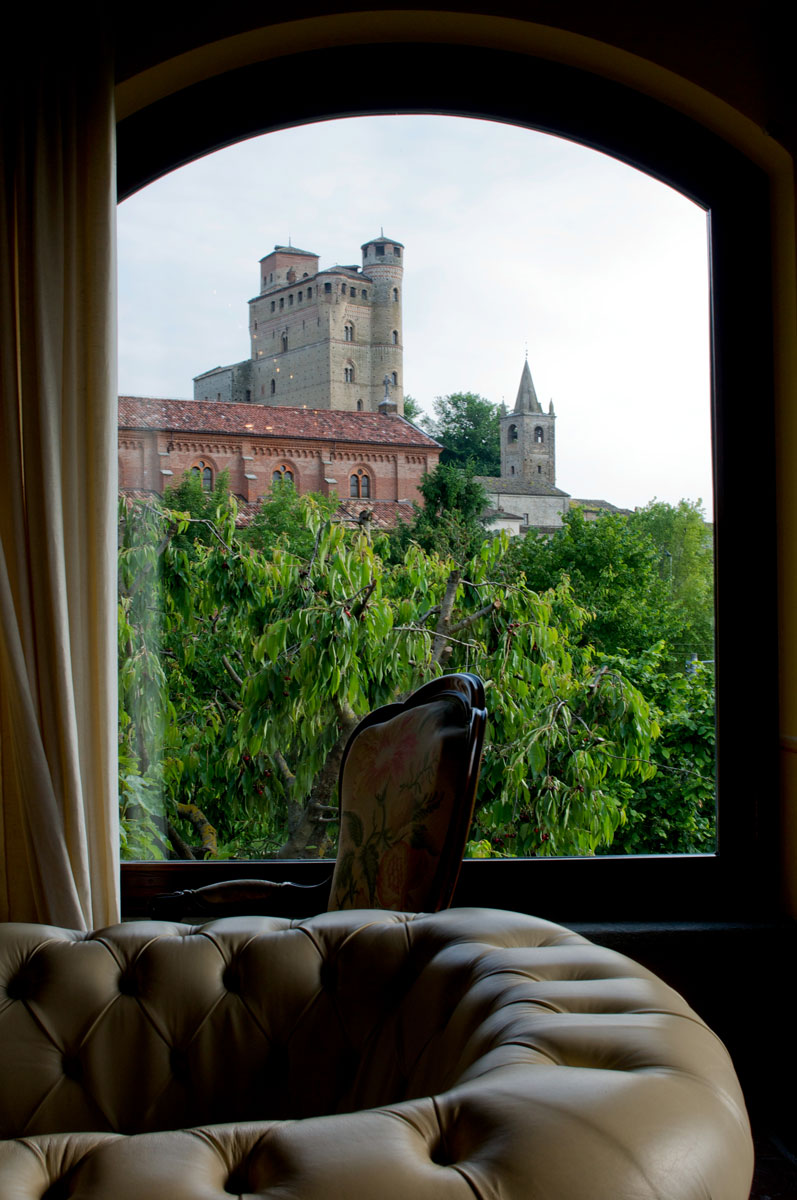
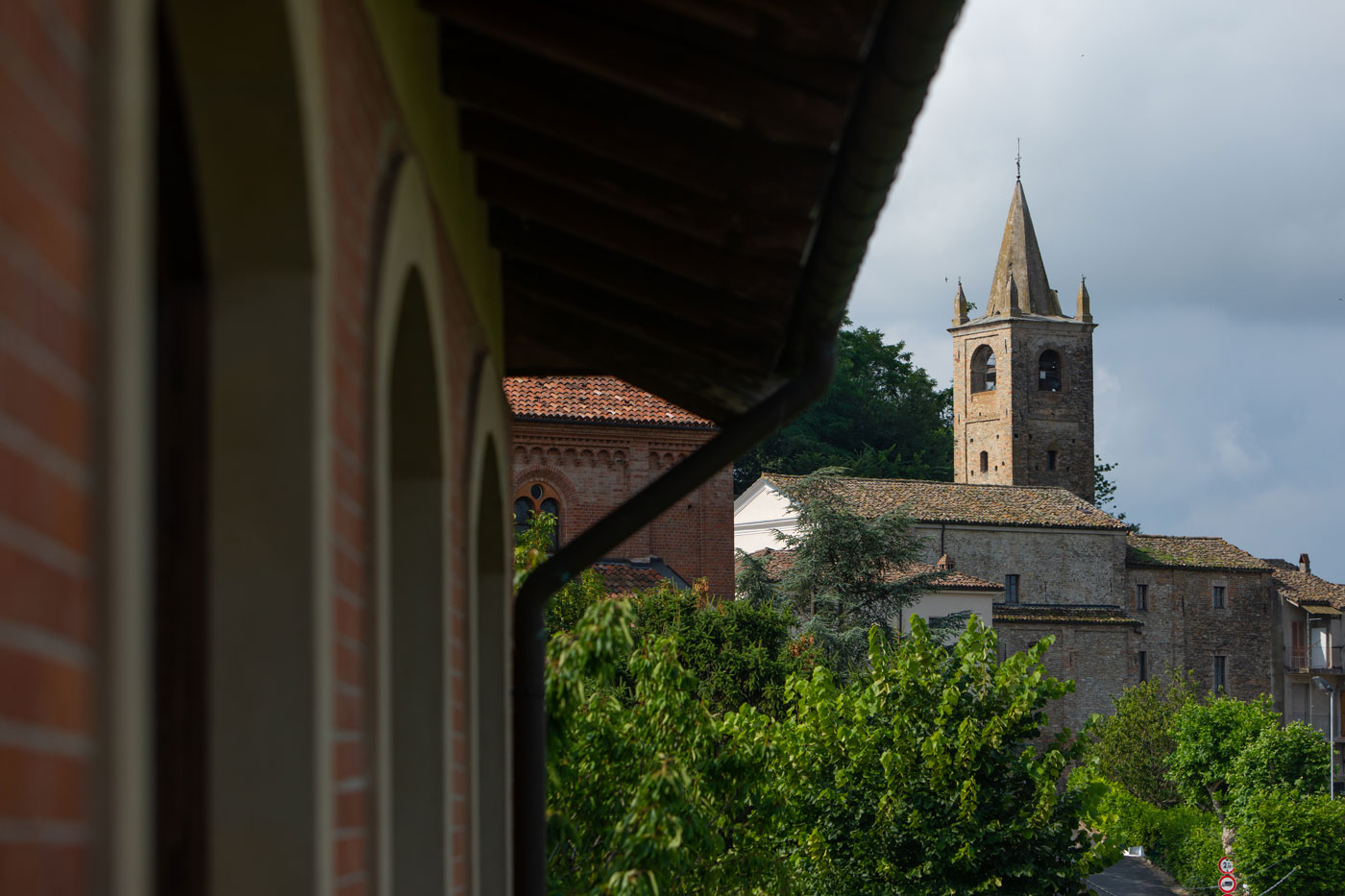
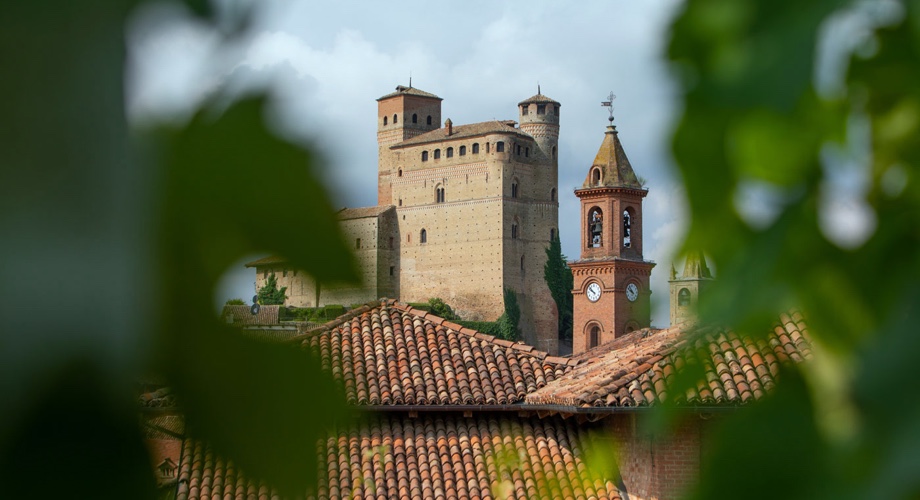
The fortress of Serralunga is a true icon among the 14th-century medieval castles of Italy. In ancient times it was the property of the Falletti family, who built this castle and other forts still visible on the hilltops of Castiglione Falletto, Barolo, La Morra and Roddi d’Alba. Since those days, it has overlooked all the surrounding fields and hills.
A typical red brick construction carried out from 1340 to 1357 by Pietrino and Goffredo Falletti, the castle became the lasting symbol of the area of the area, recognizable from a great distance due to its tall, elegant profile, with a unique design for its time. Today it is still the only French-style Donjon castle in Italy open to tourists, resembling the Donjon castles that can be seen in the Loire Valley in France.
With its strong vertical thrust, it was built not only as an excellent lookout point, but also as a symbol of the power of the Falletti over the surrounding hills, watching over the productive activities of the family in the territory. It was protected in the past by a walled enclosure, whose circular shape can still be easily glimpsed in the form of the settlement: a ring of houses gathered around the keep to form a first line of external defense and an ulterior internal line made with embankments and a moat.
The castle, which at the start of the 11th century was simply a watchtower to guard against the attacks of the Magyars and the Saracens, has clean architectural lines, composed of a narrow, oblong palacium, a round tower and a raised corner tower on the northern side. The outer façades are enhanced by mullioned windows and stringcourses with bands of small pensile arches.
The castle has been the property of the Italian state since 1949, thanks to the direct intervention of the then-President of the Republic Luigi Einaudi; it was entirely restored from 1952 to 1959. The renovation has taken the castle back to its original appearance, after having been used for agricultural storage, cellars, and wine production since 1864, the year of the death of the last Marchesa Falletti di Barolo, Juliette Colbert, known as Giulia di Barolo. The castle, in fact, had been ceded to Opera Pia Barolo (an association she founded), which created an extensive system of farmsteads and businesses involved in wine production across the territory of Serralunga.
Today the interiors of the castle are without furnishings, but they still convey a vivid impression of the manor’s character in the 1300s. Beyond the outer courtyards protected by the drawbridge and the portcullis, one enters the great hall, a space with a remarkable coffered ceiling and a small votive chapel with original frescos, restored in the early 2000s, depicting figures of saints including St. Francis of Assisi, St. Catherine of Alexandria, St. John the Baptist, St. Anthony of Padua, and the Agnus Dei in the small barrel vault. The spaces contain large fireplaces – some of them original – used for heating in the winter months.
The upper level, once a crenelated terrace, offers visitors a breathtaking view of the Langa hills: Barolo to the west, the Langhe of hazelnuts to the east. Weather permitting, they can also see the mountains in the distance, with the Maritime Alps to the southwest, the “Stone King” Monviso, and then the Cottian Alps, the Graian Alps with the silhouette of Rocciamelone, all the way to the Monte Rosa massif in the Pennine Alps. Looking north, the hills of nearby Roero come into view, with the profiles of Monticello, Santa Vittoria d’Alba and Guarene. To the south and southeast, the panorama is completed by the Maritime Alps.
Massimiliano Romanelli, Archeologist